
It was a sunny and crisp mid-winter morning in late January of this year, when I set out with my cousin and his wife on a bird watching day trip to the Western Ghats adjoining the Tamil Nadu- Kerala border. We had a common long-standing interest in deriving joy from avian sightings, and this event which was long planned was finally underway. When we ascended a small ridge in the Kerala side of the border, we halted to register the presence of a Common Hoopoe, a Black- hooded Oriole and a few of the Jerdon's Leafbirds. My cousins who were on a visit from the grand metropolis were thrilled, but they had no inkling of the greater joys that awaited them further down the road. As we gained elevation the habitat gradually changed from scrubby second growth forest to wet deciduous and evergreen forests, to finally terminate near an unused forest office outpost.
We got down from our vehicles, stocked our backpack with snacks and water, and started to trek up the gently sloping muddy roadway towards a little stream about a half a kilometre away. It is worth noting that this area used be like a wilderness a decade ago, but has since undergone some clearing of trees to establish plantations. The walk was uneventful and my cousins were looking at me as if I had brought them on an empty-headed goose chase. Being familiar with this location, which has produced a cornucopia of birds in the past, I was confident that something beautiful was about to happen. When we neared the stream, my cousin noted a Brown Shrike in an open branch and I heard the accelerated call like the smithy's hammer of the Malabar Barbet from the Ficus tree in front of us.
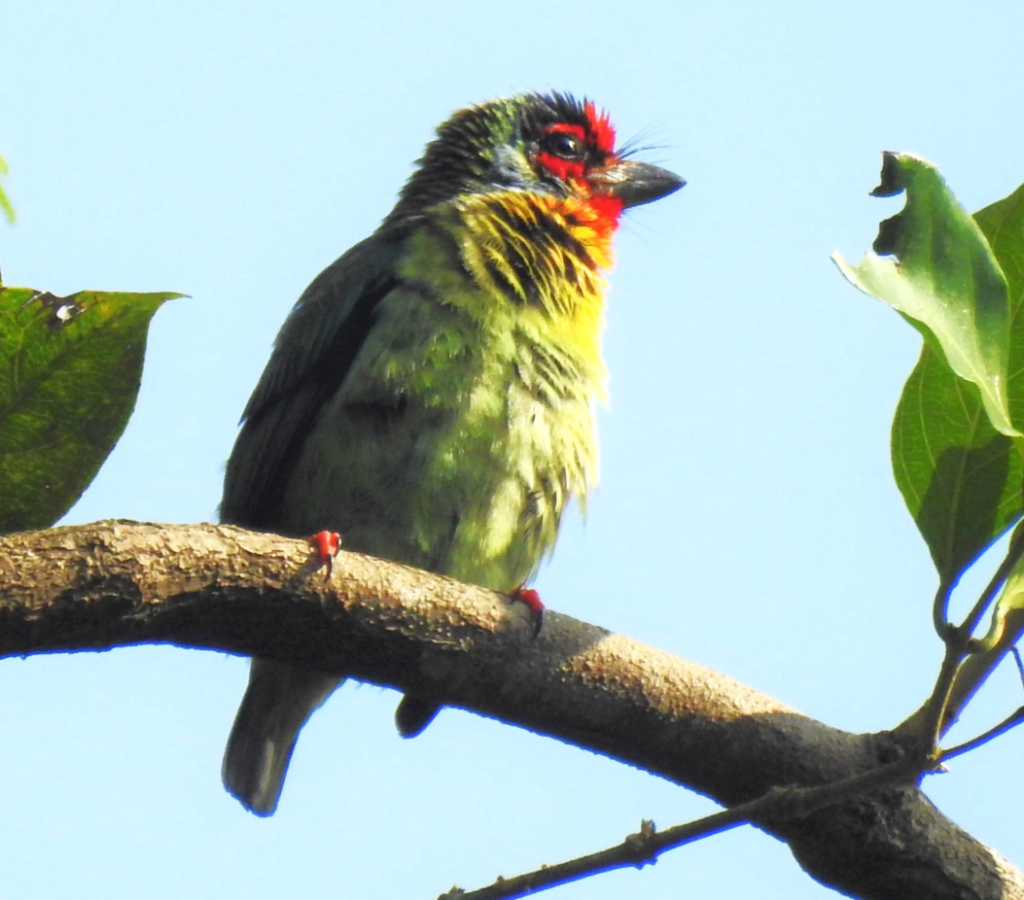
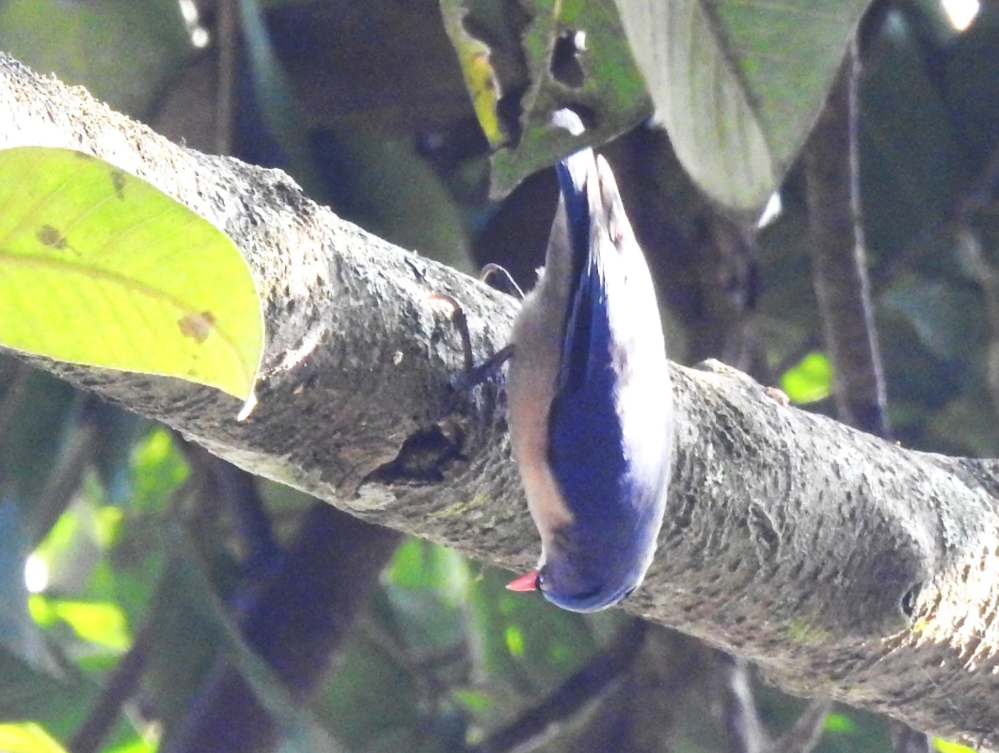
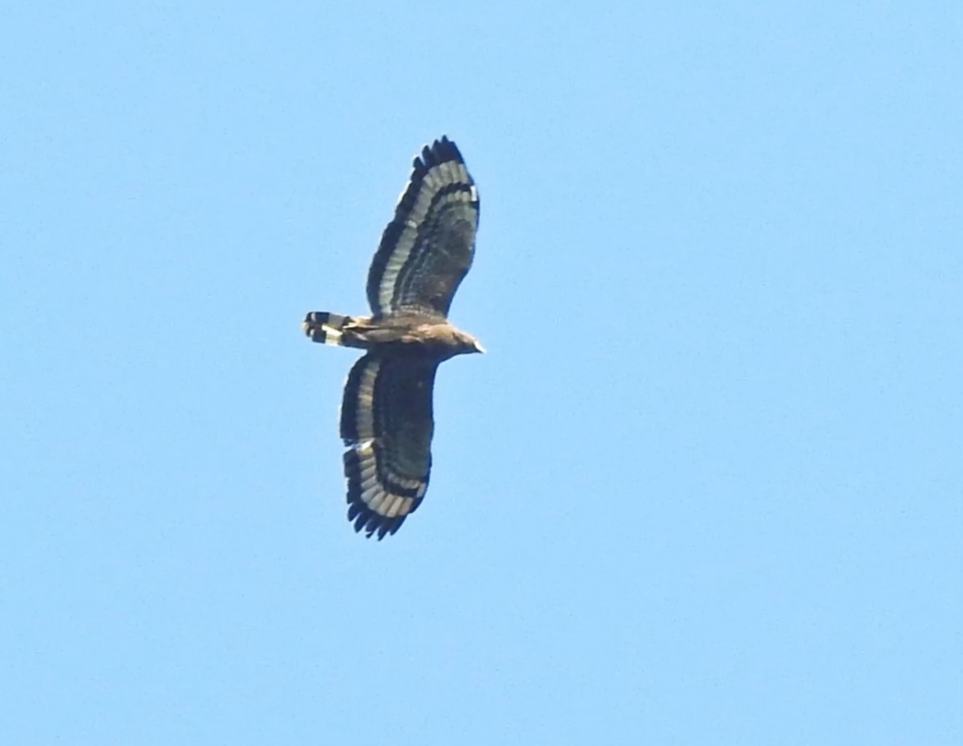
The grand doyen of Indian Ornithology Salim Ali has written that in winter the birds form what are known as mixed hunting parties; if one is encountered, many will be seen. The flood gates have been opened! In the Ficus tree before us, there were numerous Malabar Barbets along with their cousin White-cheeked Barbet eagerly feeding on the fruit. Then there were the two sought after jewels, the Malabar Grey Hornbill, and the Malabar Imperial Pigeon also joining in this feast. Intermixed with the common Red-whiskered Bulbul was the not so common Yellow- browed Bulbul and the audible cacophony was completed by the iridescent Asian Fairy Bluebird. We were struck all a heap! Soon my cousin noted a small bluish bird with a darker head feeding in the niches, while traversing effortlessly both up and down the branches. This tiny bird with a bright red beak was none other than the Velvet-fronted Nuthatch. While my fingers were trembling with nervous excitement in trying to photograph these birds, I heard the call of Crested Serpent Eagle overhead, which completed the picture.
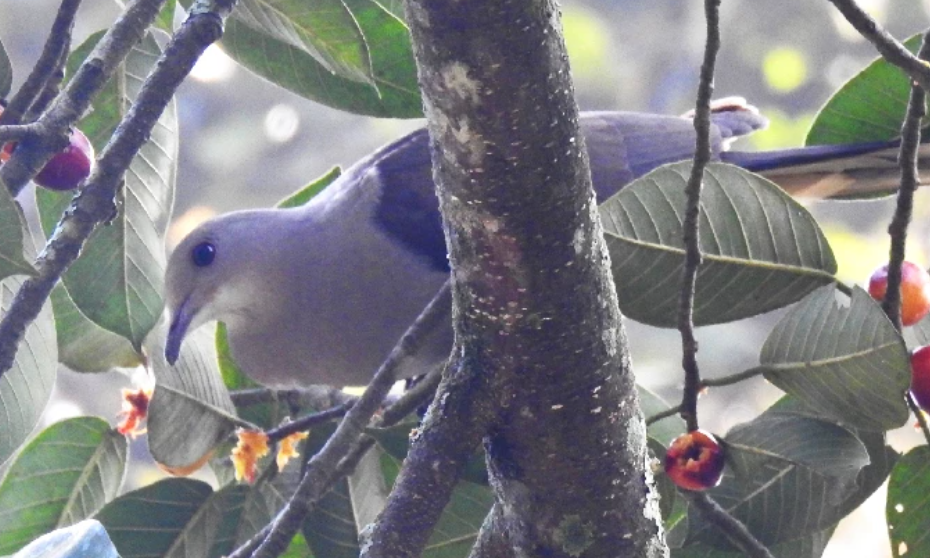
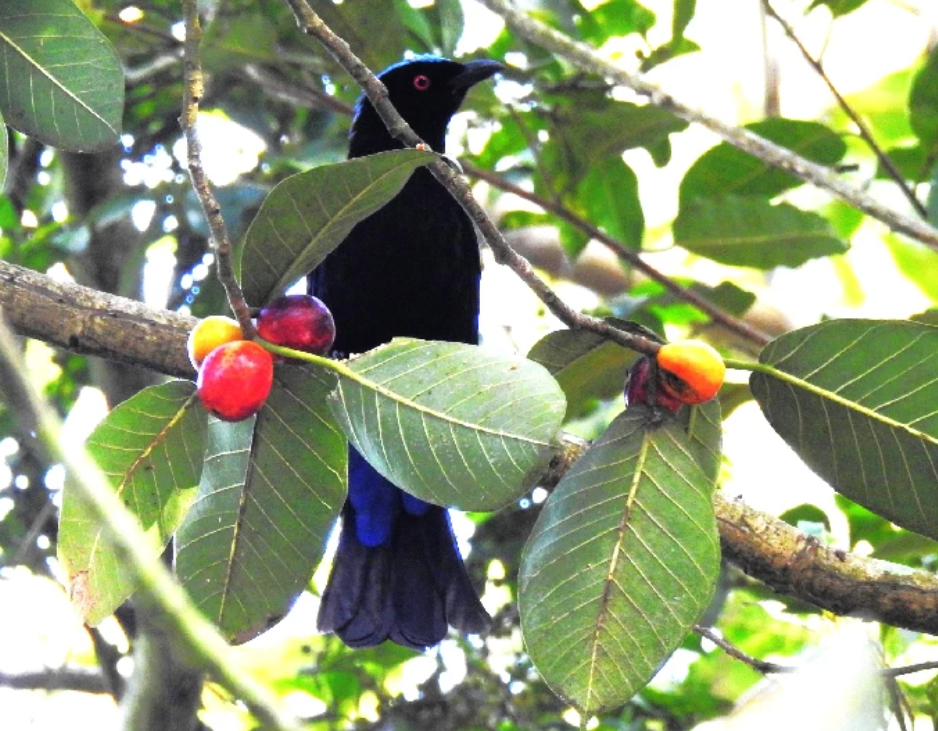
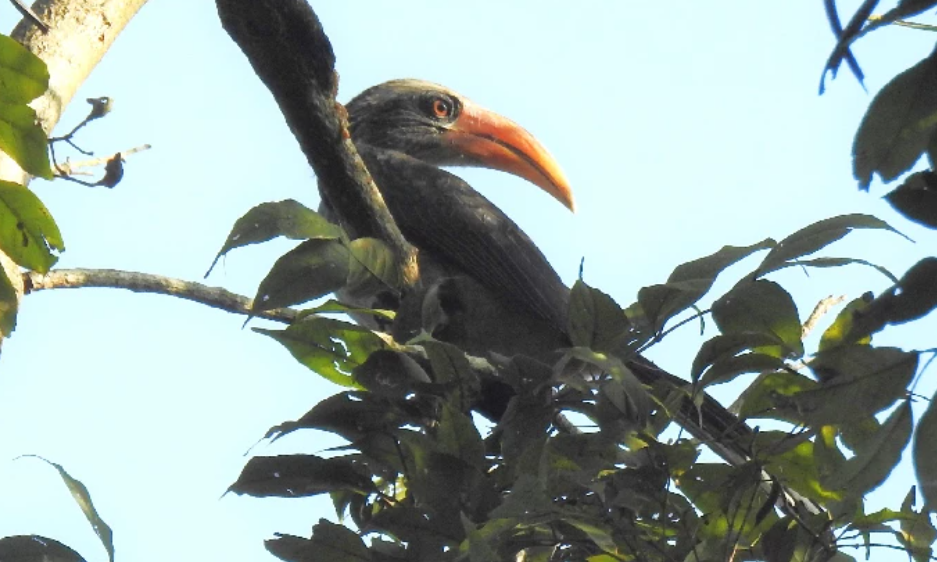
During our walk back to the car, there was an inexplicable quietness of satisfaction, because the joy we collectively experienced beside this stream and in the "Tree of Life" can be recalled again and again as an unending gift of nature, that we were fortunate to be a part of. I was also troubled by the thought, that we humans who are endowed with a Sixth Sense, may in one fell swoop cut this tree that took more than hundreds of years to manifest as eternal joy, and offer justification in the name of progress and development.
P.S: Shiva wishes to thank Ganga and Ramesh for these wonderful moments
G. Parameswaran (Shiva),
July 17 th 2023,
Coimbatore.